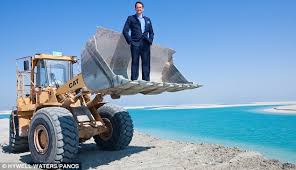
I have been in Dubai no less than 12 times, either for business purposes or for leisure escaping from time to time from the boredom of Kuwait and to be able to have a glass of wine while having dinner. For those who don´t know it, alcohol is not legal in Kuwait.
A blog about daily thoughts and songs which will build a soundtrack throughout the days, weeks and months of my year back in Madrid after living in the Middle East. This blog is just a wide range of topics and songs which become relevant enough(for me) as to be published. Enjoy it!
Wednesday, November 10, 2010
Dubai 1990-2010: how to build an evil paradise
I have been in Dubai no less than 12 times, either for business purposes or for leisure escaping from time to time from the boredom of Kuwait and to be able to have a glass of wine while having dinner. For those who don´t know it, alcohol is not legal in Kuwait.
Wednesday, October 6, 2010
XIXth century retail in the heart of Madrid or the lack of (interest for) innovation in Spain

Very close to Plaza Mayor some business are still devoted to the traditional needs of the population of the city since the past centuries.
Nowadays people still buy textiles or fabrics for curtains, sofas, or simple cotton string to tailor anything, and this particular area in the very heart of the city is ideal to find all this items and more, linked to traditional straw hats or baskets. It has been like this for centuries and apparently in the era of Ikea there's still a demand for this stores in the best retail locations in Madrid...
So far so good, I pass by some of these stores almost everyday when I leave / go back home but I have never stepped in, simply because I don't need any of the things they sell in there...until last week when I decided to get in not one but two of them to look for a specific item.
The outcome couldn't have been more depressing but it was also a travel-in-time experience...
As soon as I stepped in, a million square meter of fabrics rolled and spread randomly all over the poorly illuminated place, which by the way appeared to be a nice interior if one could be able to remove the rotten and falling paint of the wall. No less than 3 people waiting to the hours to go by behind the counter, not even asking me what I wanted or how could they help me. I asked for the price/sqm of one of the fabrics that I liked, which I find by moving by myself a pile of other rolls of fabrics. A bored fifty-something employee looking offended for me daring to interrupt his boredom, answers to me and starts cutting the dimensions I asked him to cut.
While he was doing so, some thoughts came to my mind and they are the core idea of this post:
First of all, I have nothing against these traditional business, but I can't skip the fact that some of the prime locations of the most expensive city in Spain are occupied by business that have been equally run for ages, no matter how the customers have evolved in their behavior or the changing needs of the people even within an specific sector like the textile industry...and for me that's not just an anecdote but another sign of the lack of innovation of a part of the small industry in Spain.
I was asking the employee when was this store open, and he came to say that almost a century although before there was a similar store run by another family. Something must they have done right during all these years, I thought...but I also thought that such an inertia had also a pernicious effect...who will dare to change something that has more or less (definitely not with flamboyant outcomes) worked for 100 Years? My Spanish readers surely know this: "virgencita que me quede como estoy" (Virgin Mary, let me remain as I am now). Well, this is a very paradigmatic sentence that represents pretty well the lack of flexibility/ambition/interest for challenge that characterizes Spaniards sometimes...
I am not saying that these business should be closed down, but I am sure there are ways to adapt them to the needs of the new population of the neighborhood: young people, tourist (a relatively new phenomena) and, specially, make an attractive layout that invites people to step in these stores, not in a fashion or top end design way, I don't mean that, but at least in a way that facilitates people to find things, choose what they want easily and feel they're welcome to enter rather than a necessary inconvenient.
I may be asking too much, and the critic to this post is very obvious: I'm no one to blame the structure of the business, I don't know the industry...so no recommendations today, but I am afraid that one day there will be a Bershka or Starbucks or H&M in a wonderfully located place where a nice textiles shop with colorful samples and also complements for home and decoration and great personnel in an inviting environment to step in and buy could have continued to exist...
Today´s song is posted just to celebrate that I have tickets to watch MGMT playing live in Madrid in December...
Wednesday, September 8, 2010
A biased solution for the Spanish crisis
Everybody talks about it but nobody seems to find it: I would like to share the (my) solution for the big, enormous, financial crisis we are suffering in Spain nowadays, and I am going to share it with you, basically because the solution maybe affects to you too.
Wednesday, July 21, 2010
Stars and how to be cyberstalked on Foursquare...the old debate about privacy or exposure
UK-led international team of astronomers have discovered the most massive stars to date, one which at birth had more than 300 times the mass of the Sun, with the name of R136a, frankly not a very attractive name considering we are talking about the largest piece of something existing in the universe as we know it so far.Almost at the same time, I made another discovery almost as important as that, at least in this side of the universe: It is in this article in The Guardian about how easily you can be cyberstalked on Foursquare...scary!? For those who are not familiar with this social network, Foursquare allows you to "check in" in every place you go in your city, and getting some discounts by checking in hence visiting certain places, generally restaurants, cafes or bars. The thing is that the social network is made to let your friends know where you are and let you know where they are as well, but...what happens when you also have among your so called friends people who aren't, or are just acquintances? The writer of the article, Shea Sylvia, a frequent blogger and twitter user explains how she received a misterious call when she was in a restaurant from someone called Brian, who resulted to be also at that moment in that restaurant. of course Shea was scared to death and Brian never showed up, but that made her realized how expose we all are (me included, it's just that i don't have stalkers so far...) but actually...do we care?
We all have probably be involved in esterile debates about privacy admitting how easy is for anyone to know about you and how dangerous it is, but, are we restricting our comments on Facebook yelling we are here or there? The answer is no. Maybe we all need a stalker at a certain point to change some habits, but even with that, and as Shea says, in the long term we are not going to change our level of involvement in on-line communities whatsoever!
However, i would like to respectfully recommend Shea -and to you too dear readers- to think it twice when you click on "accept as a friend", at the end it is in your hands to open your data to whoever you want, it's needless to say that privacy options on Facebook are there for a reason and if you guys don't use them is because you just don't care...!
This is a song's blog, and these are today's picks: Miranda! is an Argentinian band almost unknown in Spain but very succesful across the ocean, and "Enamorada" with a very catchy melody that keeps lingers in my head and just pops out of it from time to time. Yo La Tengo's Autumn Sweater is (or should be) a classic of 20th century (of course i am biased, specially since i saw them again live in Madrid a few months ago for the second time 12 years after the first time - in the FIB 1998-)
Sunday, July 18, 2010
Summer and Los Directivos

Finally writing again after some weeks of intellectual holidays, and after having seen Spain win the World Cup. This weekend is being the B-day parties weekend, seeing some people i haven't seen since 2008 when i went to live to Kuwait. By the way, people say it's a very hot summer, I shouldn't complain about this weather, my friends in Kuwait are struggling now with temperatures of...41º....during the night! 54º during day hours.
Friday, June 18, 2010
Casadellibro.com
In 2002 a meeting with Planeta, editorial owner of Casa Del libro, took place. in that meeting the board had to decide between two possibilities: To stick to the previously developed UNIX platform, or switch to a new Microsoft platform...In today's post i am going to shine a light on the following questions:
For the first question, I would have decided to shift for the new Microsoft platform. A hint of what should have been done can be found next 15th July when Libranda, the largest spanish platform for on-line books will be launched, containing (only) 2,000 books from the editorials Planeta, Random House Mondadori, Santillana, Roca Editorial, Grup62, SM, y Wolt
ers Kluwer.Libranda's web in its beta version describes (in spanish) its function:
"LIBRANDA es una plataforma que ofrece servicios auxiliares para la comercialización de contenidos digitales y para la promoción de los mismos. LIBRANDA actúa como un operador logístico que presta servicios de almacenaje y distribución digital a las editoriales y a las tiendas on-line. Su principal objetivo es poner a disposición de las tiendas on-line el contenido digital de las editoriales con las que trabaja. Paralelamente, y con el fin de aportar valor tanto a las editoriales como a las tiendas on-line con las que colabora, LIBRANDA ofrece herramientas de marketing digital para la promoción y la difusión de sus contenidos. El modelo de negocio de LIBRANDA permite respetar la cadena de valor del libro, promoviendo la labor cultural de los autores y agentes, de los editores y de los canales de venta del libro. En este sentido, LIBRANDA no vende directamente al público final. La labor de venta la desarrollan las tiendas on-line".
2. Which are the most relevant criteria for you to make the decision? Name each criterion and explain it very briefly.My answer for the second question once I have decided that it would be more convenient to shift to the new Microsoft platform, based on the same ideas that LIBRANDA expect to accomplish in order to succeed (extracted from publishing perspectives and summarized the most important aspects below) in the on-line books market:
- Availability: Libranda's services are offered through 21 online stores and it is important to note that the ebooks will not be sold directly to end customers from this platform, Libranda is targeted at bookshops, who will in turn sell to consumers.
- Price settings open: All decisions about release timing and pricing, as well as negotiations with retailers on terms and discounting, are left up to individual publishers, which enables to each seller to develop a more competitive price strategy.
- Competitive advantage in prices: For me, the most important competitive advantage of having a new and strong platform is that the average e-book from Libranda will cost 20-30% below the print book price (about 6 euros for paperbacks and 11-14 euros for hardcovers).
- Growing number of e-books: Although the initial number of 2,000 e-books available at launch seems small, Libranda hopes to grow the number of titles to 8-10,000 by year’s end.
- Large number of downloads: The number of downloads is not limited to one file, but up to 12 devices: 6 desktop and 6 mobile files protected with Adobe ACS4 DRM that a. Individual publishers can put a lower limit on the number downloads if they choose. All files will reside in Libranda’s digital warehouse and will be sold exclusively through their online retail partners.
- Possible agreement with Tech Giants: In a future second phase the platform plans to negotiate agreements to offer their e-books through tech giants Apple, Amazon and Google (though publishers will have to kick in an extra 2% for this service), and will also contemplate different models including subscription, streaming and lending.
- Potential expansion to Latin America's market: Also in the cards for the immediate future is expansion of the platform into the rest of the Spanish-speaking world, planned for early 2011. Libranda is negotiating with publishers in Latin America and hopes to work with local online retailers and booksellers (some of which have a more mature market and established customer base than their counterparts in Spain).
- Possible VAT reduction to equalize with physical books:The VAT is stuck at 18% for any book without a physical component, though the Spanish government has promised the publishers it will fight in Brussels to convince EU regulators to reduce the rate for e-books to the same preferential 4% enjoyed in Spain by paper books.
- Space for smaller booksellers: Libranda will offer marketing tools like widgets and samples, though it’s up to publishers whether or how they will use these. The platform will also create white pages for booksellers who don’t have their own retail website set up.
- New Website — http://www.libranda.com — will allow readers to search for available titles but to purchase e-books they will have to go to one of the participating online stores. Publishers using the platform will be able to use the website to manage their catalog of titles, upload new books, and access sales figures.
- Break even in about 5 years: 2 million euros have been raised to set up the platform and request exclusive digital distribution rights from all participating publishers, though with some flexibility. Planeta’s Badenes admitted that the platform expects to lose money in the beginning and likely won’t turn a profit for the first five years.
All the above presents a favorable scenario and could have been applicable to the case in 2002, and probably without the pessimistic expectations that surrounds every new venture nowadays in Spain.Brit sound for today's songs! "Michael Caine" by Madness has been my favorite song of the band, and "Something for the weekend" by Super Furry Animals is one of the songs that kept my attention for brit pop music in 1995 when this style was in his highest peak. Enjoy them!
TESCO to what extent do they enjoy an IT generated advantage? Where does it come from?
However, today's topic is: TESCO: to what extent do they enjoy an IT generated advantage? Where does it come from?
First of all: What is TESCO? TESCO is the largest supermarket chain in UK, and the second largest company in the food and drugs stories' industry in the world after Carrefour. it was founded in 1919 and is now present in 14 countries with 2,329 stores outside UK, and 2,329 stores only in UK.
TESCO has been characterized by being a value-for-money retailer since their commencements, which has been translated into different formulas to engage the customer and gain its loyalty: From the Green-shield stamps (every purchase you get a stamp and after several stamps you get cash or a gift) to the Club Card, with which the customers could accumulate points, convertible into vouchers, for every £5 that the customer expend for purchases exceeding £10. The importance of the Club Card as a way to collect data about TESCO's customers is crucial for the success of the company and created a trend among the mayor supermarkets and retailers worldwide, and it helps to understand my conclusions for the question at the end of this post.
Since March 2006, TESCO is undertaking a IT standardisation in order to prepare the path for a global expansion. Business processes and systems used for in-store planning in the UK have been chosen by Tesco executives as part of the global standardisation programme.
Tesco-in-a-box
TESCO has developed an operational model - a set of processes and technologies that is going to be used in its business around the world. For IT this involves four main areas: planning and architecture, development of systems, deploying systems, and operation and support of IT, as the Tesco group IT director Colin Cobain said, "Technology is an important part of the international growth strategy. What we want to do is create a common suite of processes and systems that we can use in all of our countries." This common suite of processes are integrated in what has been defined as "Tesco in a Box" . Philip A Greenwood, Head of IT Development and Support at Tesco defines it the following way: "We are now in the process of implementing a set of applications that include retail ERP (Retek), Teradata Data Warehousing Solution, reporting tools from Business Objects, a human resource solution from PeopleSoft and a finance package from Oracle Financials. We want to integrate these new systems and maintain a common database at a central location in the UK. The integration exercise will be known as ‘Tesco in a box’.
But, can we say that the expansion and success of TESCO is due to a policy of high investment in IT when the retail sector has been historically not a big spender on technology?
What can be better for any retailer than knowing who, when and how its customers are purchasing their products? Hence, based on the experience of TESCO, it is fair to admit that a huge investment in IT is widely justified and has brought to the company a outstanding market position and revenues.
Monday, June 14, 2010
should companies be adapted to ERP or the other way round?
Today the crucial question is: Should companies be adapted to ERP or the other way round?
Maybe some of you don't know what an ERP is, but i am sure most of you have heard about SAP, or even dealt with it at your companies...
Let me, in first place, define what is an ERP: According to Wikipedia, "Enterprise resource planning (ERP) is an Integrated computer-based system used to manage internal and external resources including tangible assets, financial resources, materials, and human resources. It is a software architecture whose purpose is to facilitate the flow of information between all business functions inside the boundaries of the organization and manage the connections to outside stakeholders". Although this description gives more light about it:
What can ERP do for me?
As per my personal experience, I have worked in two companies with ERP systems...and in both cases the experience was painful because I had the chance to work by the time the ERP was renewed and updated or implemented for the first time...so i am biased when i am asked if the company should adapt to the ERP or vice verse: I truly think the ERP should be adapted to the company needs, but I am also aware that the fact that an organization has been working for decades (in my case, FCC Construcción) without any of these tools doesn't mean that there is nothing to improve in the organization of the company!
However, and specially for big corporations, my opinion is that an ERP must be adapted to the needs of the company in order to be fully efficient. If we take into consideration that a ERP has been designed by a limited group of people and for very different types of companies...how can we rely on this tool to manage a giant like, for instance, FCC (more than 60,000 employees).
The cost of a non-effective implementation or just a substantial delay in reaching a cruise speed in the use of the ERP is definitely much higher than an initial rethinking of the tool in order to adapt it to the reality of the Firm.
In order to provide a more detailed answer and to summarize this post, these are the steps that should be follow
Diagnosis
Detection of points if existing processes to be improved
Development of new processes
Development of ERP Information System
Incorporation of Logistics
Training of users
Pilot application
Improvements
Delivery of ERP in full operation
Today's song is because we are not angels...
Sunday, June 13, 2010
What Dell should do? Me in Dell's shoes for the "Dell Hell' case.
Hmmm...in my last post i should have debated what would I do as Dell in the case of Jeff Jarvis, but actually i did it the other way round, putting myself in the shoes of Jeff, now I am DELL and this is what i would do:
(If you dear readers haven't got a clue about what i am talking about, read my last post or just the following lines where i explain the case of Jeff Jarvis and his war against Dell)
In 2005, a blogger called Jeff Jarvis posted in his blog Buzzmachine the purchase of a Dell laptop along with the most complete guarantee available for the item purchased. Right after receiving his laptop, it turned out to be a lemon: it didn't work, so he called to get the assistance he paid for, but they were unable to fix the problem at home and they had to take the laptop with them...this was just the beginning of the story: Dell service resulted to be completely incompetent to fix the problem, which was extended for months...and Jeff Jarvis started blogging about that: dozens, and then hundreds of comments in his blog transcended the blog sphere, and magazines like the Business Week started highlighting the case, the issue became so popular and powerful to the point that the stock price of Dell went significantly down when the news were spread in the magazines...
But, let's suppose for a second that I am a decision maker in Dell and i have to decide how to go about this guy that all of a sudden has mobilized the whole media against my company: what to do?
First of all, it is interesting to know what is actually Dell doing right now: did they learn from the experience? It seems they did: In a presentation by Lionel Menchaca, Chief Blogger at Dell in 2007, 2 years after the Dell Hell Case, the sensitivity towards the customers was definitely a core issue, as per the following conclusions (Taken from Customer Think and its blogger Mei Lin Fung) i have selected the most relevant for the case:
- Customers are in control. Work with them and learn from them.
- Address any form of dissatisfaction head on.
- Be aware that any conversation can become global at any time.
- Size doesn't matter—relevance does. Just as one journalist can trigger a newscycle, one blogger can do the same.
- Don't be afraid to apologize.
- Develop direct links to customer community (IdeaStorm for Dell), listen for how we can improve.
- One customer is part of many communities.
- Teamwork, transparency and frequent consistent communication are key in this new world.
- No shortcuts are possible. Implementing business change requires much effort across departments.
- Which leads to the new impetus at Dell to ... Engage our people to make it work
- Tools are important but people drive processes.
- Feedback digital media tools for email and chat, inside and outside of Dell, are becoming as vital as call data and traditional online support.
- Working globally means anticipating difficulties and always requires coordination with regional team members to adapt central core solutions to the local situation.
But what is not written above is the nature of these good intentions in what regards to Dell's customers: is Dell just reacting to save face or there is a true intention to offer a good customer service and avoid problems like that?
As I am the decision maker in Dell (CEO for a day...!) I would try to implement the above with a "customer service within a customer service". Means that a regular survey should be followed to include comments, failures, suggestions, improvings...proposed by Dell Customer Service's staff. What do I get with this? A service that takes himself seriously and believes in their nature: provide solutions for customers who believed in Dell as the right choice for their needs.
To conclude for the case of Jeff Jarvis, the actions to be taken would have been the following:
1) Detection of the unsatisfactory outcome of JJ's laptop by a survey team who is constantly tracking the web.
2) Analysis of the reports sent about the state of JJ laptop's fixing.
3) Once concluded the iterative failure of the laptop, immediate substitution or reimbursement to JJ.
4) Letter to apologize for the inconveniences.
5) Extended and free-of-charge guarantee for the new product in case JJ decides to accept the new Dell laptop.
6) Wrap up the story for further study in training new employees of the Customer service.
A few sentences that I have found that make so much sense to end the post:
In business you get what you want by giving other people what they want.
ALICE MACDOUGALL
Customers don’t expect you to be perfect.
They do expect you to fix things when they go wrong.
DONALD PORTER
Customer service is not a department, it's an attitude!
UNKNOWN
22 years before this mess, REM appeared for the first time on TV presenting "murmur", its first album. There was a time where Michael Stipes wasn't bold / shaved...
What would I do if i was Jeff Jarvis? "Dell Hell" case
In first place, let me brief you about the subject of this post:
In 2005, a blogger called Jeff Jarvis posted in his blog Buzzmachine the purchase of a Dell laptop along with the most complete guarantee available for the item purchased. Right after receiving his laptop, it turned out to be a lemon: it didn't work, so he called to get the assistance he paid for, but they were unable to fix the problem at home and they had to take the laptop with them...this was just the beginning of the story: Dell service resulted to be completely incompetent to fix the problem, which was extended for months...and Jeff Jarvis started blogging about that: dozens, and then hundreds of comments in his blog transcended the blog sphere, and magazines like the Business Week started highlighting the case, the issue became so popular and powerful to the point that the stock price of Dell went significantly down when the news were spread in the magazines...
But the question to be answered here is what would i do if i had the same problem?
In first place, and knowing what happened to Jeff Jarvis, what I would have clear is that...I don't want a Hell's Dell!! So as soon as I started realizing things are not going better, I would definitely try to get my money back and buy the new Ipad!! (Yeah, I've just disclose my next purchase...)
But let's suppose that I have gone through Jeff's nightmare and I have to decide what to do Well, I am not a prominent blogger and the repercussion of this blog is almost zero, so I think i would start a bunch of initiatives to make my case known:
1) Create a Facebook group to gather attention of those who sympathize with my problem or those who has already suffered it (with a little bit of luck Mr. Jeff Jarvis will also join the group!).
2) If the group becomes popular I can probably create a page and maybe make some money enough to purchase my desired Ipad and give away my Dell!
3) Forward the case to the Spanish consumer's association OCU and be patient...
4 and not very probable...) This is Spain, what really makes people or news popular is the social repercussion in certain TV programs like El Diario when people -generally with low class and even lower education- expose their problems: maybe i had a chance, but i really have to be desperate to do it!
Anyhow, I have one notebook and one laptop, both HP, It's not like they are perfect, but i am relatively satisfied with them, and if something happens I'm afraid that the guarantees are already expired...
Again, although there are some posts where the subject is actually requested by our professor of Information Systems, Enrique Dans , this intends to be a personal blog, and what i promised at least is to upload a song which i may, for one reason or another, be identified with...
The sweetest song ever by My Bloody Valentine, and then a Carlos Berlanga song from "Indicios" from 1994. Have a good day!